
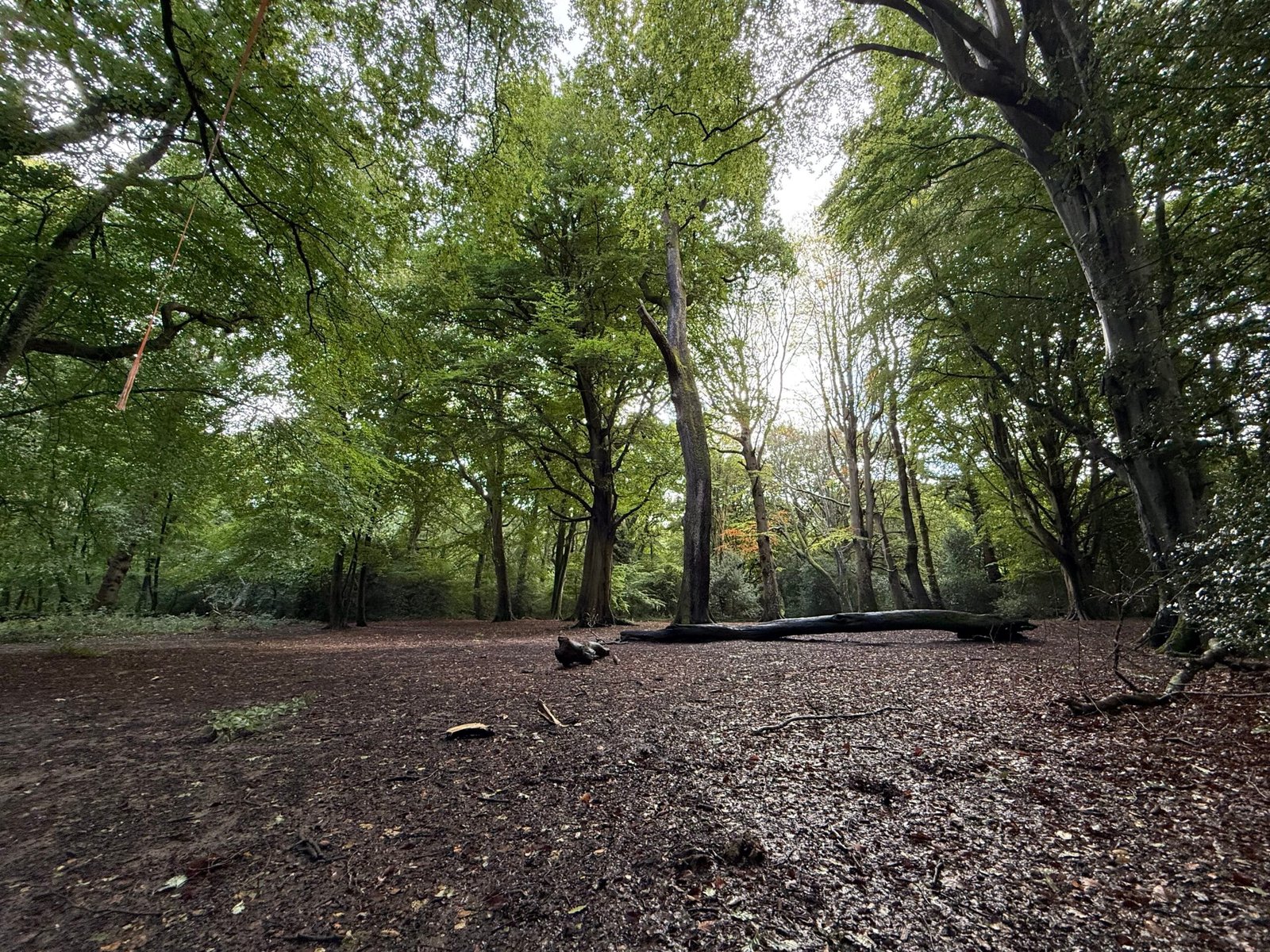
Today I woke up to a bit of a stir in the local paper. You might have seen it. A local resident, Andrew Ruff, shared some worries in the Worcester News about our beloved Worcester Woods. He was concerned about trampling, the building of dens, and the impact of half a million visitors a year on our ancient bluebell carpets. Amidst his valid concerns about the "wear and tear" of the woods, he mentioned something that caught my eye. He was worried that Forest Bathing might be adding to the problem.
Now, I have been walking these woods for years. I know every twist of the oak roots and the exact week the bluebells decide to wake up. I care about this woodland as if it were my own garden, maybe even more. So, I want to set the record straight, not with a raised voice, but with a deep, calming breath. Because, as it turns out, the mindful practice of being in the woods is actually the very thing that will save them.
The Misunderstanding of "Loving Nature to Death"
It is true that Worcester Woods, at times, can be busy. With an estimated 500,000 visitors annually, that is a lot of boots (and paws) on the ground. When it comes to organised groups, Mr Ruff mentioned that people are "effectively paying the council to trample the woods." I understand that perspective when you see huge groups or unsupervised "tourism" where kids (and adults) go off-track to build dens or pick flowers. But there is a massive, quiet difference between general tourism and a guided session with me at The Tranquil Mind. And for context, a mere 0.02% of these visitors are Forest Bathers with me.
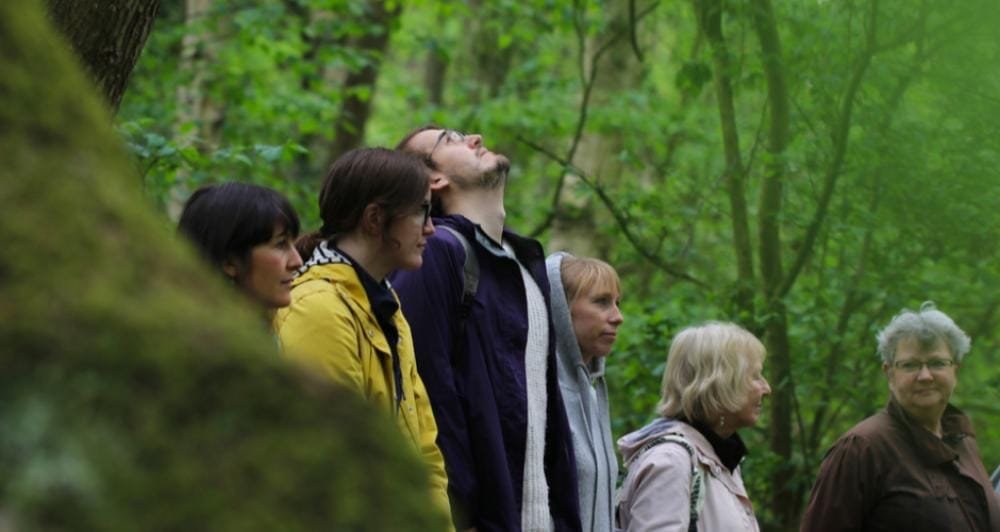
When I lead a group, we are not "trampling." On the contrary, we are barely moving. In fact, if you saw us from a distance, you might think we were part of the scenery. We adhere strictly to "Leave No Trace" principles, a global standard for outdoor ethics that ensures our presence is as light as a fallen leaf.
The Practice of Forest Bathing vs. General Tourism
During a Forest Bathing session, we don't go off-piste into sensitive bluebell patches. I have carried out risk assessments and work closely with the Worcester County Council to ensure we are using designated routes that ensure my groups avoid sensitive biodiversity areas. These are also generally in the quieter areas that can handle our slow, deliberate footsteps. We aren't trampling or building dens. We aren't tearing down saplings or leaving litter. We are simply being.
Most of our time is spent standing still or sitting, using our senses to "turn up the dial" on our awareness. We notice the texture of the bark, the sounds of the birds, the scent of the damp earth, and the way the light filters through the canopy. This is a far cry from the high-impact activity of hundreds of thousands of unguided walkers and runners. In fact, by bringing people into the woods in this structured, mindful way, we are teaching them how to be better visitors every other day of the year.
If you are curious about how we actually move through the space, you can take a look at our upcoming Forest Bathing Worcester Woods sessions. You will see that our focus is entirely on preservation and connection.
The Science: Why "Connection" Saves the Woods
To counter these misconceptions, I want to bring in a bit of "the science" here, but don't worry, I won't get too jargon-heavy. Miles Richardson, a professor at the University of Derby, has done some incredible work on what he calls "Nature Connectedness." His research shows that simply "spending time" in nature (like those other 499,900 annual visitors) isn't enough to make people want to protect it.
Richardson found that Nature Connectedness is actually the single best predictor of pro-environmental behaviour. In his research summary, which you can explore on his Finding Nature blog, he explains that when people feel an emotional and meaningful bond with the natural world, they are far more likely to take active steps to conserve it.
By facilitating Forest Bathing, I am helping people build that bond. I am potentially creating the very stewards the Worcester Woods need to survive for another 500 years. A person who has spent two to three hours with me mindfully "noticing" an ancient oak is a person who will never dream of breaking its branches for a den. They become protectors. They become advocates. As Richardson’s work suggests, "noticing, feeling, and beauty" are the pathways to a sustainable future.
Putting the Record Straight
So, back to Mr Ruff and the Worcester News article. I actually agree with him on many points. The woods are a "nature park and a wood of national significance." Being part of the very small area of the UK that is semi ancient or ancient woodland they do need protection. But the solution isn't to keep people out or to view every organised activity with suspicion. The solution is to change how we interact with the woods and wider education must be a part of this equation.
Forest Bathing is therefore not a cause for concern as it is the antidote to the apathy that leads to trampling. When we teach people to love the woods, they stop hurting them. Forest Bathing leaders like me are building a community of people who see the bluebells not as a backdrop for a photo, but as a vital part of a living ecosystem.
I invite anyone, including the concerned residents of Nunnery Wood, to come and see how we work. You will find no broken branches, no trampled flowers, and no heavy footprints. You will only find people who are learning to listen to what the trees and the rest of the natural world has to say.
Let’s protect our heritage together, one mindful breath at a time.
Recent Comments