What I’ve noticed chatting to participants at my sound baths and other well-being-based sessions is that in our hyper-connected world, many of us find ourselves caught in a paradox: we have tools designed to make life easier, yet we feel increasingly overwhelmed, distracted, and mentally drained. So I did a bit of research and it appears as though the average person checks their phone 58 times daily, with 30 of these checks occurring during working hours, according to research from RescueTime. This digital immersion is reshaping our attention spans, impacting stress levels, and negatively affecting overall wellbeing.
Yet the solution isn’t necessarily to abandon technology entirely. Rather, it’s about developing a more mindful relationship with our digital tools. In the spirit of supporting you I wrote this article to share practical strategies for integrating micro-mindfulness techniques and effective digital detox practices into your daily routine, helping you reclaim your attention and nurture your mental well-being in the digital age.
The Impact of Digital Overload
Before diving into solutions, it’s worth understanding what’s at stake and why you might want to consider creating a few new habits. Constant digital engagement triggers our brain’s reward pathways in ways similar to addictive substances. The app creators know this only too well and grab you in ways you are not even aware of.
A study published in the Journal of Behavioural Addictions found that merely having a mobile phone within view can reduce available cognitive capacity, even when we’re not actively using it.
The consequences of this “always on” mentality include:
- Fragmented attention and reduced ability to focus deeply
- Increased stress hormones from constant alertness to notifications
- Disrupted sleep patterns from blue light exposure and mental stimulation
- Diminished real-world connections as digital interactions replace face-to-face engagement
- “Comparison anxiety” from social media’s highlight reels
These effects aren’t simply inconveniences, they represent genuine challenges to our mental well-being and cognitive capabilities. Fortunately, even small adjustments to our digital habits can yield significant benefits.

Micro-Mindfulness: Small Practices, Big Impact
Micro-mindfulness practices offer accessible entry points to mindfulness without requiring extended meditation sessions. These brief moments of awareness can be seamlessly integrated into even the busiest schedules.
1. The STOP Technique
When feeling digitally overwhelmed, try this four-step practice:
- Stop: Pause whatever you’re doing and close your device or step away from the screen.
- Take a breath: Breathe deeply, inhaling for 5 seconds and exhaling for 5 seconds.
- Observe: Notice your surroundings, physical sensations, emotions, and thoughts without judgment.
- Proceed: Continue your activity with renewed awareness and intention.
This simple technique creates a moment of conscious choice rather than automatic reaction, helping break the cycle of mindless scrolling or task-switching.
2. One-Minute Breathing Reset
Between digital tasks, try this: Set a timer for 60 seconds and focus entirely on your breath. Count to four as you inhale, then count to four as you exhale. If it feels comfortable for you to do so, inhale through your nose and exhale with a sigh sound through your mouth. This brief practice activates your parasympathetic nervous system (responsible for “rest and digest” functions), counteracting the stress response triggered by constant digital stimulation.
Researchers at Stanford University found that even a brief breathing exercise like this can reduce anxiety and improve attention. This makes the one-minute breathing reset particularly valuable during intensive screen time or before important virtual meetings.
3. Five Senses Check-In
Digital devices primarily engage our visual and auditory senses while neglecting others. To rebalance, try this quick sensory grounding exercise with your screen down or off:
- Notice 5 things you can see
- Acknowledge 4 things you can touch
- Identify 3 things you can hear
- Recognise 2 things you can smell
- Note 1 thing you can taste
This practice pulls your attention back to your physical environment and away from the digital realm, creating immediate presence.
4. Mindful Transitions
Rather than jumping immediately from one digital task to another, create intentional micro-breaks between activities. Before opening a new app or starting a new task, take three conscious breaths. This creates a “buffer zone” between activities that reduces cognitive fragmentation and helps maintain mental clarity throughout your day.
Digital Detox Strategies That Actually Work
While complete disconnection isn’t realistic for most people, strategic digital detoxes can significantly improve wellbeing. The key is implementing boundaries that feel supportive rather than restrictive.
1. Create Tech-Free Zones and Times
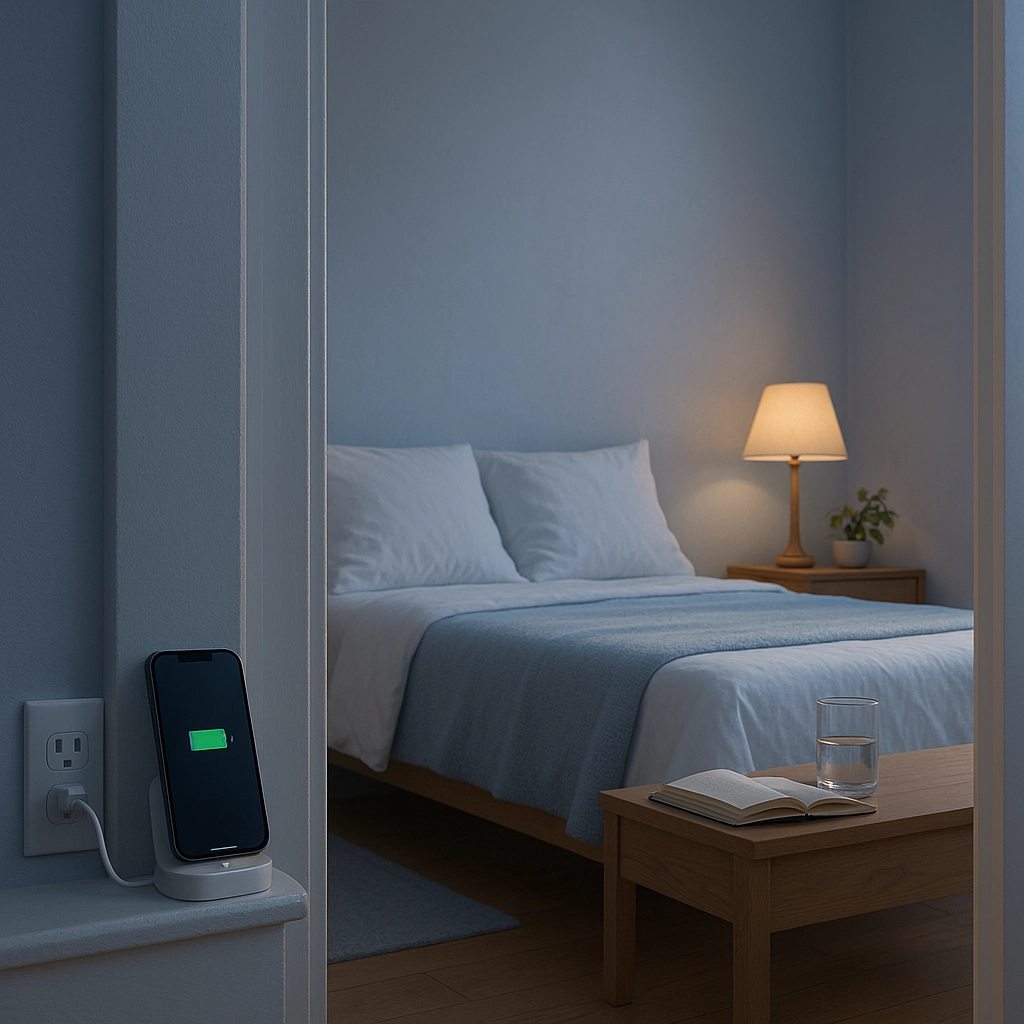
Designate specific areas in your home as screen-free zones. The dinner table and bedroom are excellent places to start. Research published in Sleep Health journal indicates that using screens before bedtime significantly impacts sleep quality and duration. Consider implementing a “digital sunset” by switching devices to night mode and eventually powering down completely 1-2 hours before sleep.
2. Batch Process Communications
Rather than responding to messages as they arrive (which fragments attention and increases stress), schedule specific times to check and respond to emails, messages, and social media. This approach, also recommended by productivity experts, allows for deeper focus during work and more present engagement during leisure time.
Try starting with three designated check-in times throughout your day:
- Morning review (after your personal morning routine)
- Midday check-in
- End-of-day processing
Outside these times, silence notifications or use “Do Not Disturb” mode to prevent interruptions.
3. Implement the 20-20-20 Rule
To counter digital eye strain and create natural breaks, follow the 20-20-20 rule recommended by the American Optometric Association: Every 20 minutes, look at something at least 20 feet away for at least 20 seconds. This simple practice reduces eye fatigue while providing natural moments to check in with yourself. Our eyes are naturally dilated when we’re stressed, and if you intentionally bring your awareness to the bigger, wider, more distant visual picture, this invokes the parasympathetic nervous system.
4. Adopt Single-Tasking
Contrary to popular belief, multitasking is largely a myth. Research from the University of London found that attempting to multitask with electronic media lowered IQ scores comparable to missing a night’s sleep. Instead, practice “single-tasking”:
- Work with only one screen and one window open when possible
- Complete one digital task before beginning another
- Set a timer for focused work sessions (25-50 minutes) followed by short breaks
- Close or silence apps not relevant to your current task
This approach builds “attention muscle” and reduces the dopamine-seeking behaviour encouraged by rapid task-switching.
Practical Implementation: Making These Practices Stick
Knowledge alone rarely changes behaviour. Here are practical strategies to integrate these practices into your daily life:
1. Start Small and Build Gradually
Begin with just one micro-mindfulness practice that resonates with you. Perhaps it’s the STOP technique when you find yourself mindlessly scrolling, or a breathing reset between meetings. Once this becomes habitual, add another practice to your repertoire.
2. Use Technology to Manage Technology
Numerous apps and settings can support your digital wellbeing goals:
- Screen time tracking and app limits on both iOS and Android
- Browser extensions that limit time on distracting websites
- Focus mode settings that temporarily restrict notifications
- Apps that guide brief mindfulness practices
The key is finding tools that serve your intentions rather than adding to your digital burden.

3. Create Environmental Triggers
I always share that it’s best to incorporate new, mindfulness based habits into things you are doing anyway. So link your new digital wellness practices to existing habits or environmental cues. For example:
- Practice the five-senses check-in when waiting for the kettle to boil
- Do a breathing reset when stopping at traffic lights
- Implement the STOP technique whenever you sit down at your desk
- Charge your phone outside the bedroom to maintain that space as a tech-free zone
4. Practise Self-Compassion
Changing digital habits is challenging in a world designed to capture attention. When you find yourself falling back into old patterns, respond with curiosity rather than criticism. Congratulate yourself for noticing, then simply notice what happened, reset with a micro-mindfulness practice, and continue with your intentions.
The Ripple Effects of Digital Mindfulness
As you integrate these practices, you’ll likely notice benefits extending beyond reduced screen time. Participants in digital mindfulness programmes frequently report:
- Improved sleep quality and duration
- Enhanced ability to focus and complete complex tasks
- Reduced anxiety and stress levels
- More meaningful face-to-face connections
- Greater awareness of how they actually want to spend their time
- Increased creativity and problem-solving capacity
A study published in the Journal of Positive Psychology found that participants who reduced social media use by just 30 minutes daily reported significant improvements in well-being measures after three weeks.
Conclusion: Mindful Digital Citizenship
The goal isn’t to demonise technology but to reclaim our relationship with it. By implementing micro-mindfulness practices and thoughtful digital boundaries, we can enjoy the benefits of our connected world while preserving our mental well-being, attention, and agency.
Remember that this journey isn’t about perfection but progress. Each mindful moment and intentional choice builds a foundation for a more balanced digital life. The most powerful technology at your disposal isn’t your smartphone or computer—it’s your attention. By cultivating awareness of how, when, and why you engage with digital tools, you transform from passive consumer to mindful digital citizen.
If you’re interested in exploring mindfulness practices further, my forest bathing sessions offer a complete nature-based retreat from digital stimulation, helping reset your nervous system and deepen your mindfulness practice in a natural setting.
Recent Comments