I’ll be honest with you. When I first heard the term “ecoNIDRA,” I thought someone had just mashed two wellness buzzwords together and hoped for the best. Another trendy practice to add to the ever-growing list of things promising to fix our frazzled modern lives, right?
Wrong. So wonderfully, beautifully wrong.
After diving headfirst into my studies to become a certified ecoNIDRA teacher, I’ve discovered something genuinely special. It’s not just yoga nidra with a nature soundtrack slapped on top. It’s a thoughtfully crafted practice that brings together ancient wisdom, modern neuroscience, and our innate connection to the natural world. And honestly? It makes so much sense that I’m surprised nobody thought of it sooner.
So What Exactly Is ecoNIDRA?
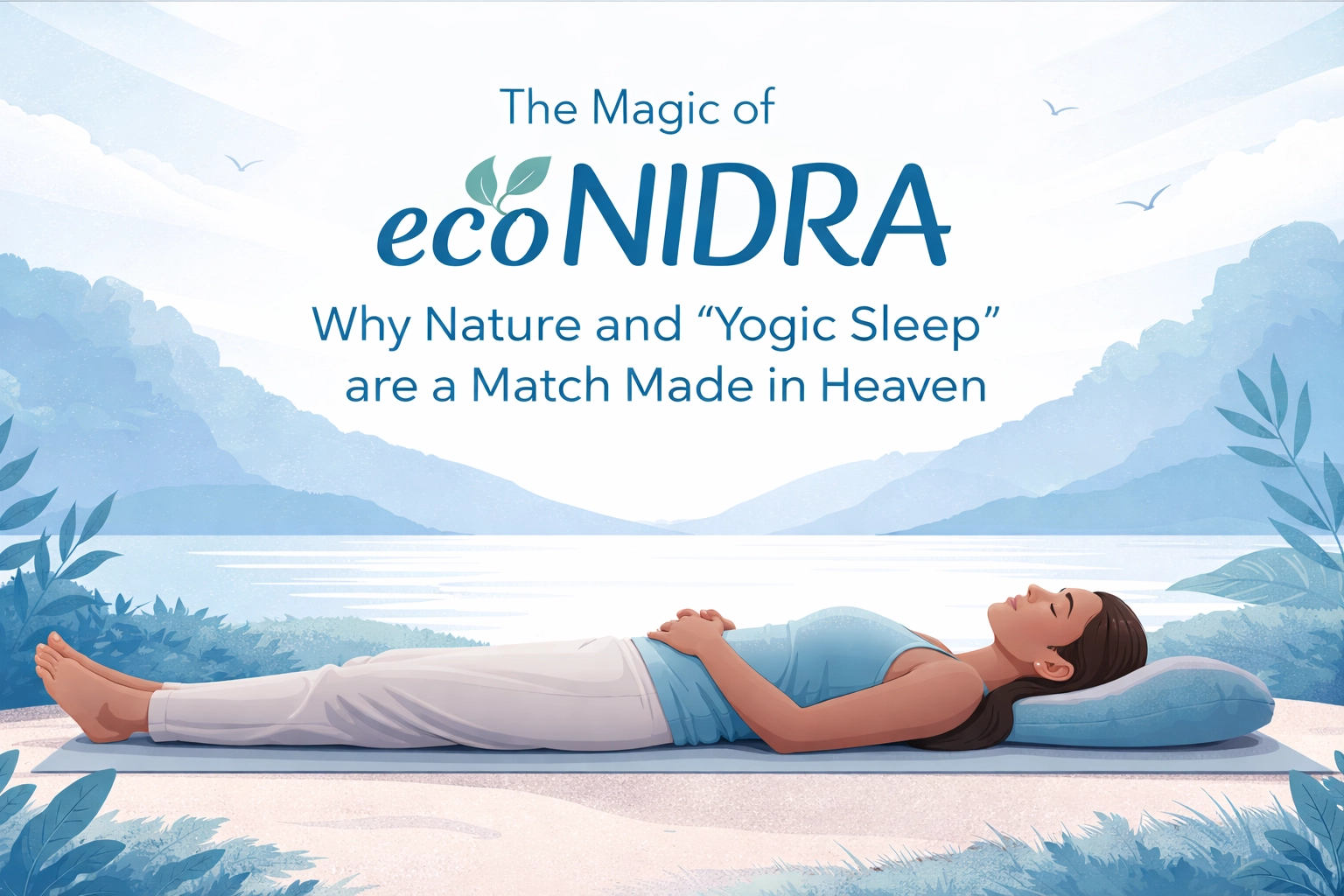
Let’s start with the basics. You might already be familiar with yoga nidra, sometimes called “yogic sleep.” It’s an ancient meditation practice that guides you into a state of deep relaxation while you remain conscious. Think of it as hovering in that delicious space between waking and sleeping, where your body gets to rest properly and your mind can process, release, and restore.
EcoNIDRA takes this powerful foundation and weaves in nature connection practices. It’s inspired by forest therapy (or Shinrin-yoku, if you want the Japanese term that started it all). The practice integrates professionally recorded nature soundscapes, sensory journeys through the natural world, and a deeper awareness of our relationship with the earth beneath our feet.
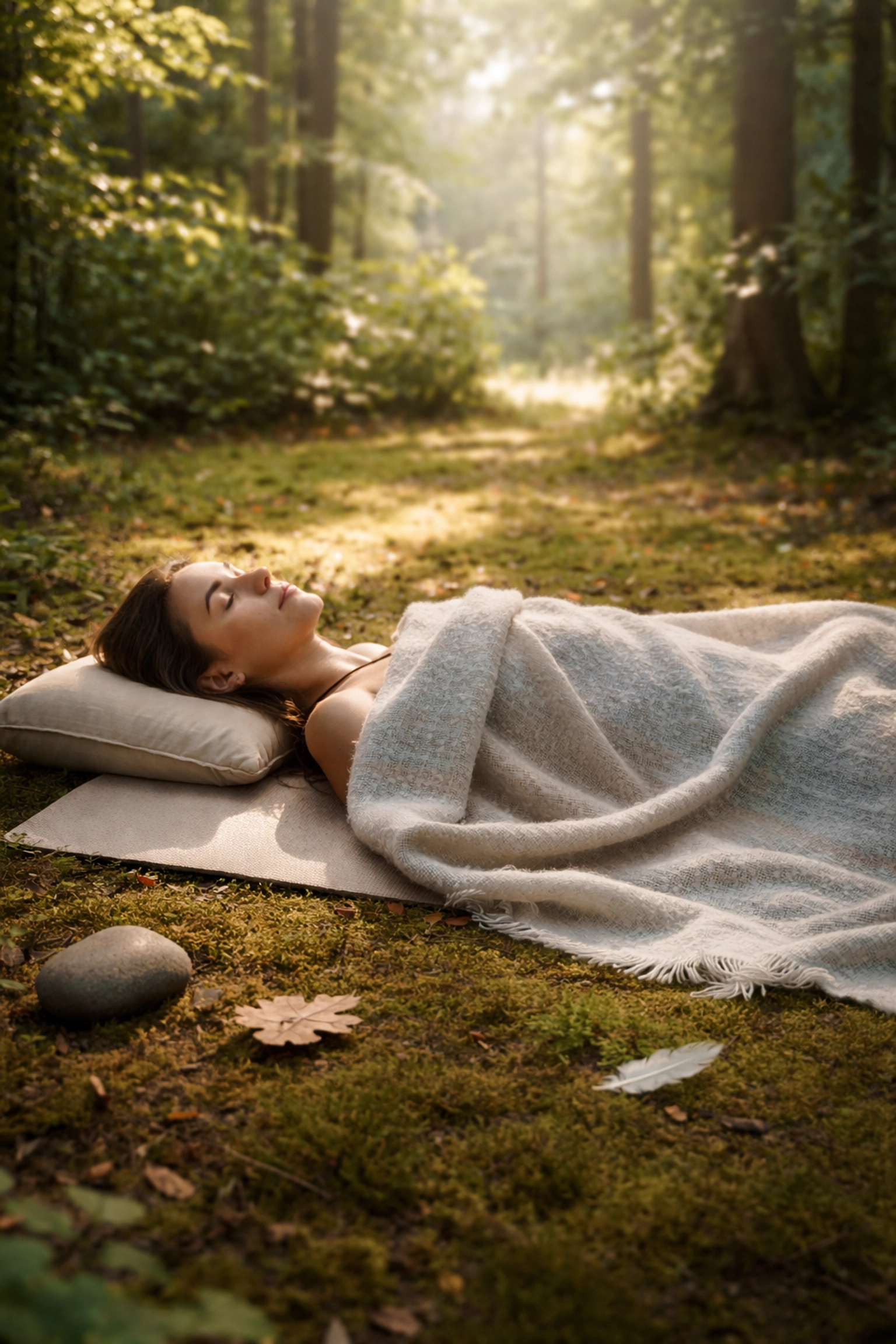
The result is a triple journey. You travel through your body (the classic rotation of consciousness you might know from traditional yoga nidra), through your senses (heightened awareness of smell, touch, sound), and through an Earth journey via immersive nature sounds. Some practitioners even bring a nature object, perhaps a smooth pebble, a fallen leaf, or a feather, as a focal point and silent witness to their practice.
It sounds simple. It is simple. And yet something rather extraordinary happens when these elements come together.
The Science Behind Why This Works
I’m a bit of a research nerd (my browser history is embarrassing), so I couldn’t just accept that ecoNIDRA “feels good.” I needed to understand why.
Here’s what’s happening in your body during practice. When you enter that deeply relaxed state, your parasympathetic nervous system kicks in. This is your “rest and digest” mode, the opposite of the fight-or-flight response that so many of us are stuck in these days. Your heart rate slows. Your breathing deepens. Your muscles release tension they’ve been holding for who knows how long.
Your brain waves shift too. During ecoNIDRA, you move into theta state, those slow, dreamy brain waves associated with deep meditation, creativity, and REM sleep. Research published in the International Journal of Yoga has shown that yoga nidra practices can significantly reduce cortisol levels (that’s your stress hormone) and improve overall markers of wellbeing.
Now add nature sounds to the mix. Studies from Brighton and Sussex Medical School found that natural sounds physically alter the connections in our brains, reducing our body’s fight-or-flight instinct. Participants listening to nature sounds showed increased parasympathetic activity compared to those listening to artificial sounds.
When you combine yoga nidra’s deep relaxation with nature’s proven calming effects, you’re essentially giving your nervous system a double dose of exactly what it needs.
What Are the Benefits of ecoNIDRA?
Right, let’s talk about what you might actually notice from regular practice. And I should say, everyone’s experience is different. My journey has been quite personal, and yours will be too.
Sleep quality tends to improve. This is often the first thing people notice. Not just falling asleep faster, but waking up feeling genuinely rested. Some research suggests that one hour of yoga nidra can provide restorative benefits equivalent to four hours of sleep. I’m not saying skip your sleep (please don’t), but it’s remarkable how the practice seems to teach your body how to rest properly again.
Emotional regulation gets easier. I’ve found myself responding rather than reacting to things that would have previously wound me up. There’s a spaciousness that develops, a tiny pause between stimulus and response.
The immune system gets support. When you’re not constantly in stress mode, your body can actually do its repair work. Digestion improves. Inflammation decreases. Your system gets a chance to do what it’s designed to do.
Creativity and focus sharpen. That theta brain state isn’t just relaxing; it’s where ideas connect in unexpected ways. I’ve had some of my best insights during or immediately after practice.
And there’s something else. Something harder to measure but very real. A sense of connection. To yourself, to the natural world, to something larger than your to-do list. It sounds a bit woo-woo when I write it down, but there it is.
Why ecoNIDRA Is Wonderfully Accessible
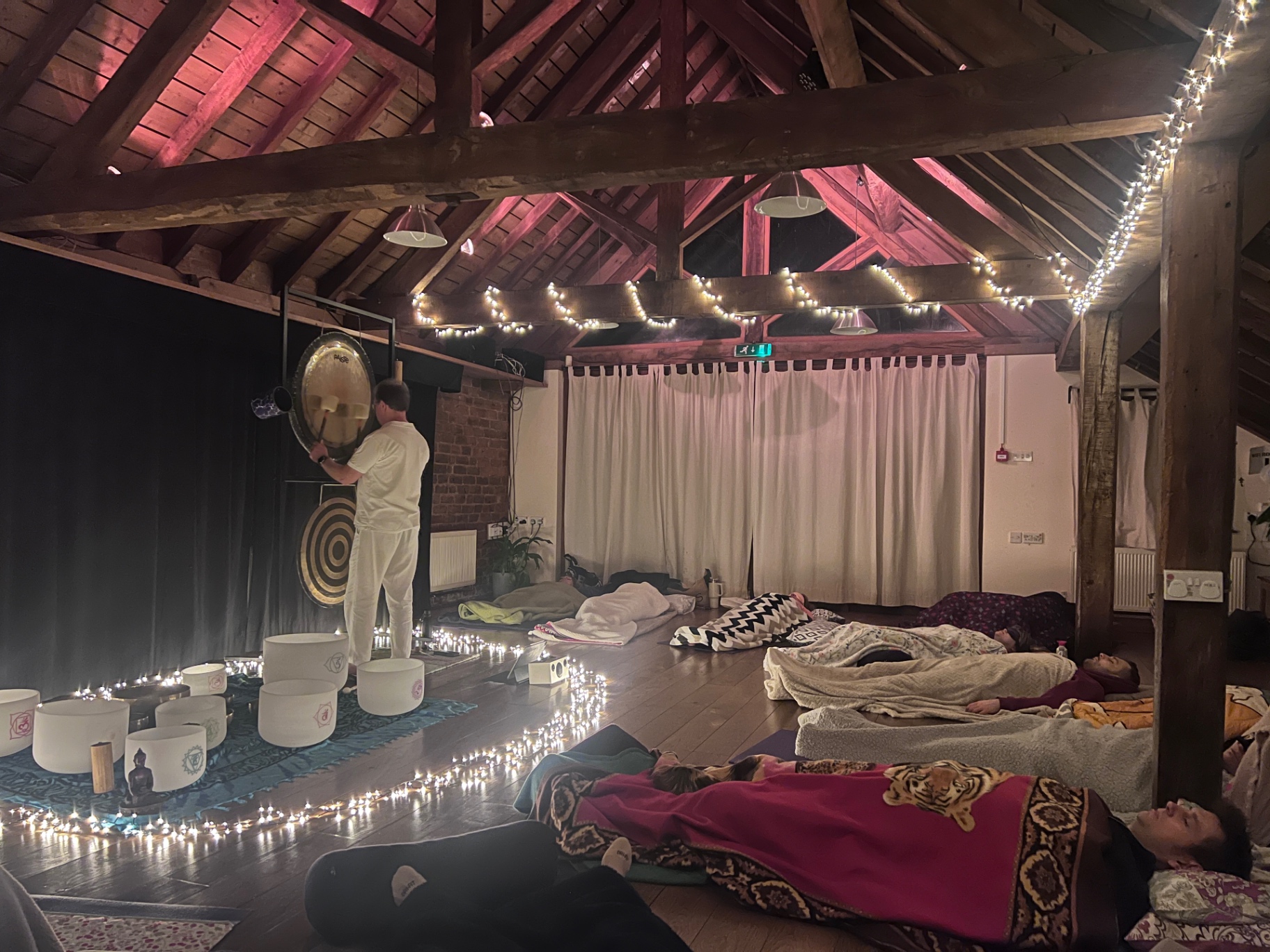
Here’s what I love most about this practice, and why I’m so excited to bring it to the Worcester wellbeing community. You don’t need to be flexible. You don’t need fancy equipment. You don’t need any previous meditation experience.
You lie down. That’s it. That’s the physical requirement.
I’ve taught yoga nidra to people who told me they “can’t meditate” because their minds are too busy. The beauty of this practice is that you don’t need to empty your mind or achieve some mythical state of blankness. You simply follow the guidance and let your body do what it naturally knows how to do when given permission.
The nature element makes it even more intuitive. We’ve evolved alongside forests, rivers, and birdsong for thousands of years. Our nervous systems recognise these sounds. They feel like home in a way that a silent meditation room sometimes doesn’t.
There’s no jargon to learn, no complicated breathing techniques to master. If you’ve ever felt intimidated by wellness practices that seem to require a PhD in Sanskrit, ecoNIDRA might be your thing.
My Journey to Becoming an ecoNIDRA Teacher
I should mention that I’m currently in the middle of my training to become a certified ecoNIDRA teacher. It’s been quite the journey so far; challenging, illuminating, and occasionally making me question everything I thought I knew about relaxation practices.
What drew me to this particular training was the balance between tradition and innovation. The creators of ecoNIDRA have respected the ancient roots of yoga nidra while thoughtfully integrating evidence-based elements. It’s not about throwing out the old in favour of the shiny and new. It’s about evolution.
I’m genuinely excited to bring this to The Tranquil Mind community. Whether you’ve been practising meditation and mindfulness for years or you’re completely new to all of this, I think there’s something here for you.
Ready to Experience It?
If you’re curious about how nature connection can enhance your relaxation practice, or if you’ve tried meditation before and found it wasn’t quite right for you, keep an eye on my upcoming events. I’ll be offering ecoNIDRA sessions once I complete my certification, and I’d love for you to be among the first to experience it.
In the meantime, you might enjoy exploring forest bathing or attending one of my regular yoga nidra sessions. Consider them a gentle introduction to what’s coming.
The practice concludes with participants committing to a random act of kindness, extending the healing ripple outward. I rather like that. Wellness that doesn’t stop at our own edges but reaches toward others and the world around us.
Sometimes the most profound practices are the simplest ones. Lie down. Listen. Let nature do what it’s been doing for millennia.
Recent Comments